Introduction
Few places on Earth leave hikers speechless like Grand Canyon National Park. The Colorado River carved it over millions of years. This vast canyon shows layers of rock history and steep cliffs. It also has some of the most famous hiking trails in the United States.
Whether this is your first visit or a return trip, there is plenty to do. The park offers scenic rim walks and tough backcountry routes. Many trails drop thousands of feet into the canyon.
In this Grand Canyon National Park travel guide, you will find the best time to visit. You will also find top sights, famous trails, travel tips, maps, and nearby lodging. If you plan to visit Grand Canyon National Park, this guide will help you pick trails. It will also help you make the most of your trip.
Few places on Earth leave hikers speechless the way Grand Canyon National Park does. Carved by the Colorado River over millions of years, this immense canyon reveals layers of geological history, dramatic cliffs, and some of the most iconic hiking trails in the United States.
Whether you’re planning a first-time visit or returning for a deeper adventure, the park offers everything from scenic rim walks to challenging backcountry routes descending thousands of feet into the canyon.
In this Grand Canyon National Park travel guide, you’ll discover the best time to visit, must-see attractions, famous hiking trails, travel tips, maps, and where to stay nearby. If you’re planning to visit Grand Canyon National Park, this guide will help you choose the right trails and make the most of your trip.
Where Is Grand Canyon National Park?
Grand Canyon National Park is in northern Arizona, USA. It covers more than 1.2 million acres of rugged desert and deep canyon land.
The park is divided into two primary areas:
South Rim
The South Rim is the most popular and accessible section of the park. It stays open year-round and offers numerous viewpoints, visitor centers, and famous trails.
Key features include:
- Bright Angel Trail
- South Kaibab Trail
- Desert View Drive
- Grand Canyon Village
North Rim
The North Rim sits about 1,000 feet higher than the South Rim and receives far fewer visitors. It offers cooler temperatures and a quieter experience.
However, the North Rim is only open from mid-May through mid-October due to snow.Grand Canyon National Park has some of the most famous hiking trails in the world. Trails range from easy rim walks with wide views to tough backcountry routes. These routes drop thousands of feet to the Colorado River.
Before starting any hike, remember that descending into the canyon is optional — climbing back out is mandatory. Always carry plenty of water, start early, and monitor the weather conditions.
Below are the best Grand Canyon National Park hikes for different experience levels.
Bright Angel Trail


Distance: Up to 12 miles round trip to Plateau Point
Elevation Change: ~3,060 ft
Difficulty: Strenuous
Trailhead: Grand Canyon Village (South Rim)
Bright Angel Trail is the most famous hiking trail in Grand Canyon National Park and one of the safest routes for descending into the canyon.
Unlike other trails, Bright Angel provides:
- Water stations (seasonal)
- Shaded rest houses
- Emergency phones
- Gradual switchbacks
Because of these facilities, it is the most recommended trail for first-time canyon hikers.
Popular Turnaround Points
1.5 Mile Resthouse (3 miles round trip)
Perfect for beginners wanting a short taste of canyon hiking.
3 Mile Resthouse (6 miles round trip)
A moderate hike with dramatic canyon views.
Indian Garden (9 miles round trip)
A lush oasis with cottonwood trees and shade — one of the most popular day-hike destinations.
Plateau Point (12 miles round trip)
Offers stunning views of the Colorado River, making it one of the most rewarding day hikes in the park.
Why Hike Bright Angel Trail
- Classic Grand Canyon experience
- Great for first-time visitors
- Multiple turnaround options
- Reliable water sources
South Kaibab Trail


Distance: 7 miles round trip to Skeleton Point
Elevation Change: ~2,040 ft
Difficulty: Strenuous
Trailhead: Yaki Point (Shuttle access only)
South Kaibab Trail offers arguably the best panoramic views in Grand Canyon National Park. Because the trail follows exposed ridgelines, hikers enjoy unobstructed views throughout the hike.
However, there are no water stations or shade, so preparation is essential.
Key Viewpoints
Ooh Aah Point (1.8 miles round trip)
One of the most popular sunrise viewpoints in the park.
Cedar Ridge (3 miles round trip)
A wide plateau with incredible views of the canyon.
Skeleton Point (6 miles round trip)
The first location where hikers can see the Colorado River from the South Kaibab Trail.
Why Hike South Kaibab Trail
- Spectacular canyon viewpoints
- Excellent sunrise photography
- Less crowded than Bright Angel
- Dramatic ridge hiking
Rim Trail

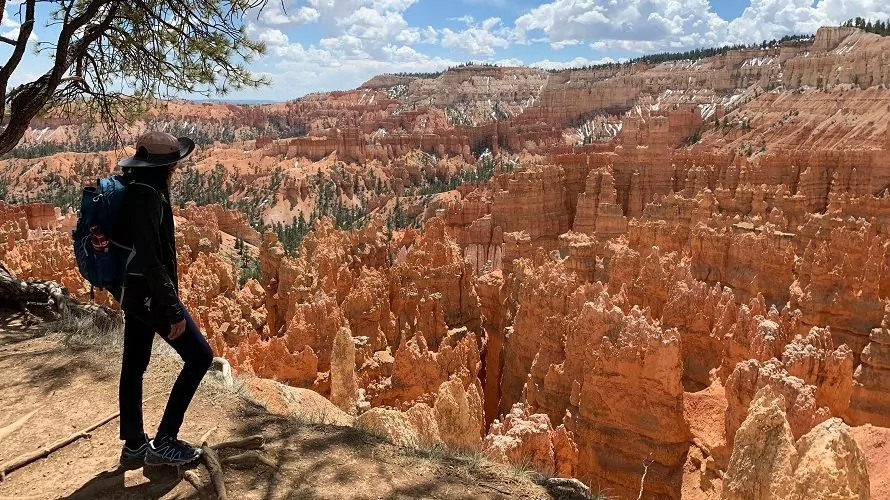
Distance: 13 miles total (mostly flat)
Difficulty: Easy to moderate
Trailheads: Multiple locations along the South Rim
The Rim Trail is one of the most accessible and scenic hikes in Grand Canyon National Park. It follows the canyon edge and provides continuous viewpoints without steep climbs.
Much of the trail is paved and wheelchair accessible, making it perfect for families and casual visitors.
Best Sections of Rim Trail
Mather Point to Yavapai Point
Short walk with incredible panoramic views.
Village to Hopi Point
Great for sunset views and photography.
Hermit’s Rest Section
Quieter area with fewer crowds and scenic overlooks.
Why Hike the Rim Trail
- Minimal elevation gain
- Perfect for beginners
- Incredible viewpoints along the canyon edge
- Shuttle stops along the route
Grandview Trail

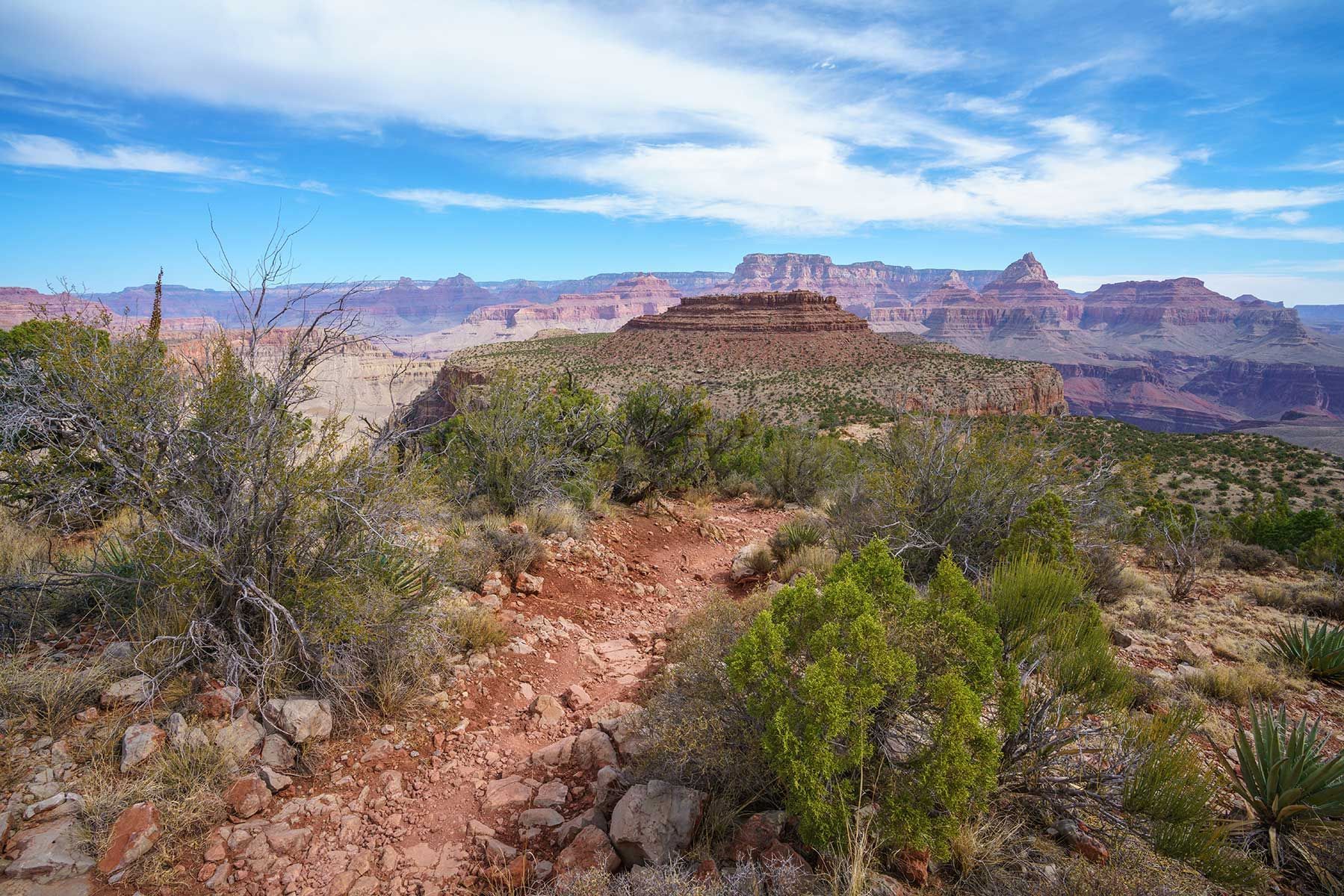
Distance: 6 miles round trip to Horseshoe Mesa
Elevation Change: ~2,500 ft
Difficulty: Difficult
Trailhead: Grandview Point
Grandview Trail is one of the steepest and most rugged trails on the South Rim. Originally built by miners in the late 1800s, the trail drops rapidly into the canyon.
Because of its difficulty and lack of facilities, it attracts fewer hikers, making it ideal for those seeking solitude.
Highlights
Horseshoe Mesa
A large plateau deep in the canyon offering expansive views.
Historic Mining Sites
Remnants of old copper mining operations remain visible along the trail.
Why Hike Grandview Trail
- Less crowded than major trails
- Challenging terrain for experienced hikers
- Unique historical features
North Kaibab Trail


Distance: 14 miles to Phantom Ranch
Elevation Change: ~6,000 ft
Difficulty: Very strenuous
Trailhead: North Rim
North Kaibab Trail is the only maintained trail from the North Rim to the Colorado River and is part of the legendary Rim-to-Rim hike.
Because the North Rim sits at a higher elevation, the trail begins in a pine forest environment before descending into the desert canyon.
Key Landmarks
Supai Tunnel
A rest stop with shade and water (seasonal).
Roaring Springs
A powerful waterfall emerging from canyon walls.
Phantom Ranch
A historic lodging area located near the Colorado River.
Why Hike North Kaibab Trail
- Part of the iconic Rim-to-Rim hike
- Diverse landscapes and ecosystems
- Less crowded than South Rim trails
Pro Hiking Tips for Grand Canyon Trails
Experienced hikers know the canyon requires careful planning.
Start Before Sunrise
Temperatures inside the canyon can rise 20°F hotter than the rim.
Bring More Water Than You Think
Park rangers recommend at least 3–4 liters for longer hikes.
Eat Regularly
Electrolytes and salty snacks help prevent heat exhaustion.
Watch the Weather
Summer heat and monsoon storms can make trails dangerous.
Turn Around Early
Many hikers underestimate the difficulty of climbing back to the rim.
Best Time to Visit Grand Canyon National Park
Choosing the right time to visit Grand Canyon National Park can dramatically improve your experience.
Spring (March – May)
Spring is one of the best seasons for hiking.
Benefits include:
- Comfortable hiking temperatures
- Fewer summer crowds
- Wildflowers beginning to bloom
However, early spring can still bring snow at the rim.
Summer (June – August)
Summer is the busiest time in the park.
Pros:
- All services and facilities open
- Ideal for sunrise and sunset photography
Cons:
- Heavy crowds
- Extremely hot temperatures inside the canyon (often above 105°F / 40°C)
If hiking in summer, start before sunrise.
Fall (September – November)
Fall is arguably the best overall season.
Advantages:
- Cooler temperatures
- Fewer visitors than summer
- Clear skies for photography
Winter (December – February)
Winter offers a unique and peaceful canyon experience.
Expect:
- Snow on the rim
- Quiet trails
- Limited services
But the views of the canyon with snow can be spectacular.
Top Attractions in Grand Canyon National Park
Before hitting the trails, there are several iconic attractions you shouldn’t miss.
Mather Point
Located near the main visitor center, Mather Point is often the first view visitors see. The overlook offers sweeping panoramic views across the canyon and is perfect for sunrise.
Desert View Watchtower
The Desert View Watchtower sits on the eastern edge of the park and offers incredible views of the Colorado River far below.
It’s also one of the best stops along Desert View Drive.
Grand Canyon Skywalk
Located outside the park on Hualapai land, the Skywalk is a glass bridge extending over the canyon. It provides a unique perspective looking straight down into the canyon.
Grand Canyon Village
This historic area contains:
- Lodges
- Restaurants
- Visitor centers
- Historic buildings
It’s also the starting point for several major hiking trails.
Where to Stay Near Grand Canyon National Park
There are several accommodation options depending on your travel style.
Lodges Inside the Park
Staying inside the park allows early trail access.
Popular lodges include:
- Bright Angel Lodge
- El Tovar Hotel
- Maswik Lodge
- Yavapai Lodge
Reservations often book months in advance.
Tusayan (Closest Town)
Located just 10 minutes from the South Rim, Tusayan offers:
- Hotels
- Restaurants
- Tour services
It’s the most convenient base outside the park.
Flagstaff
Flagstaff sits about 80 miles south of the canyon and offers:
- More affordable hotels
- Restaurants and nightlife
- Access to other Arizona attractions
Frequently Asked Questions About Grand Canyon National Park
1. What is the best hike in Grand Canyon National Park?
The Bright Angel Trail is widely considered the best hike in Grand Canyon National Park. It offers shaded rest stops, water stations, and multiple turnaround points, making it ideal for both beginners and experienced hikers. Popular destinations include the 3 Mile Resthouse, Indian Garden, and Plateau Point.
2. What is the easiest hike in Grand Canyon National Park?
The Rim Trail is the easiest and most accessible hike in Grand Canyon National Park. The trail follows the canyon edge with minimal elevation gain and offers incredible viewpoints along the South Rim. Many sections are paved and suitable for families.
3. Can you hike to the bottom of the Grand Canyon?
Yes, hikers can reach the Colorado River using trails like Bright Angel Trail, South Kaibab Trail, and North Kaibab Trail. However, hiking to the bottom and back in one day is extremely strenuous and not recommended for most visitors.
4. Do you need a permit to hike in Grand Canyon National Park?
You do not need a permit for day hikes in Grand Canyon National Park. However, a backcountry permit is required for overnight backpacking, camping below the rim, or staying at Phantom Ranch.
5. How long does it take to hike the Grand Canyon?
The time depends on the trail and distance. Short hikes on the Rim Trail may take 1–2 hours, while deeper hikes like Bright Angel Trail to Indian Garden can take 5–6 hours round trip. A full rim-to-river hike can take 10–12 hours or more.
6. What is the best time to visit Grand Canyon National Park?
The best time to visit Grand Canyon National Park is spring (March–May) and fall (September–November) when temperatures are cooler and crowds are smaller. Summer can be extremely hot inside the canyon.
7. Is Grand Canyon National Park good for beginner hikers?
Yes. While some trails are challenging, beginners can enjoy scenic hikes like the Rim Trail, short sections of Bright Angel Trail, and viewpoints along the South Rim that offer incredible views without difficult hiking.
8. How much water should you bring when hiking the Grand Canyon?
Hikers should carry at least 1 liter of water per hour of hiking. In hot weather, you may need even more. Electrolytes and salty snacks are also recommended to prevent dehydration.
9. Can you do the Grand Canyon Rim-to-Rim hike in one day?
Yes, experienced hikers sometimes complete the Rim-to-Rim hike, which is about 21–24 miles depending on route. However, it requires excellent fitness, proper planning, and an early start.
10. Is visiting Grand Canyon National Park worth it?
Absolutely. With its massive canyon landscapes, world-class hiking trails, and breathtaking viewpoints, Grand Canyon National Park is one of the most spectacular natural destinations in the world.