
Glacier National Park — Best Hikes in Glacier National Park: Top Trails & Tips
If you’ve ever dreamed of turquoise alpine lakes, wildflower meadows, and knife-edged ridgelines, the Best Hikes in Glacier National Park deliver in spades. Choosing the right trail can feel overwhelming—over 700 miles of trail, variable weather, and wildlife considerations all add up. This guide cuts through the noise: quick trail facts, what to pack, pacing and safety tips, and how to choose between show-stopper day hikes like the Grinnell Glacier Trail, Avalanche Lake via Trail of the Cedars, Iceberg Lake Trail, Hidden Lake Overlook, Ptarmigan Tunnel, and the iconic Highline Trail. Read on and pick the perfect hike for your fitness and schedule.
What makes these the Best Hikes in Glacier National Park (short answer)
The best hikes combine memorable destinations (glacial lakes, tunnels, alpine overlooks), maintained trails with good wayfinding, and options for different fitness levels—making them reliable choices for first-time visitors and repeat hikers alike.
Quick planning essentials before you go
- Park pass and seasonal road status (Going-to-the-Sun Road opens/closings matter).
- Bear safety: carry and know how to use bear spray; make noise in dense areas.
- Start early: popular trailheads fill and wildlife is most active in mornings.
- Check conditions and trail closures before you leave.
(These basics keep your day safe and fun—Glacier is wild country.)
Highline Trail — Highline Trail (Iconic, panoramic, bucket-list)
Why hike it
The Highline Trail is Glacier’s signature route—walk the Garden Wall, peer over alpine bowls, and experience big-mountain exposure. It’s flexible: short out-and-back options from Logan Pass or a one-way to Granite Park Chalet.
Quick facts
- Distance: ~7–12+ miles depending on route
- Difficulty: Moderate–Strenuous (exposure in sections)
- Time: 4–8 hours
Pro tips
- If doing one-way, arrange a shuttle or car-swap.
- Use trekking poles for balance on thin ridge sections.
- Stay well back from cliff edges and watch for dropoffs—some sections are narrow.
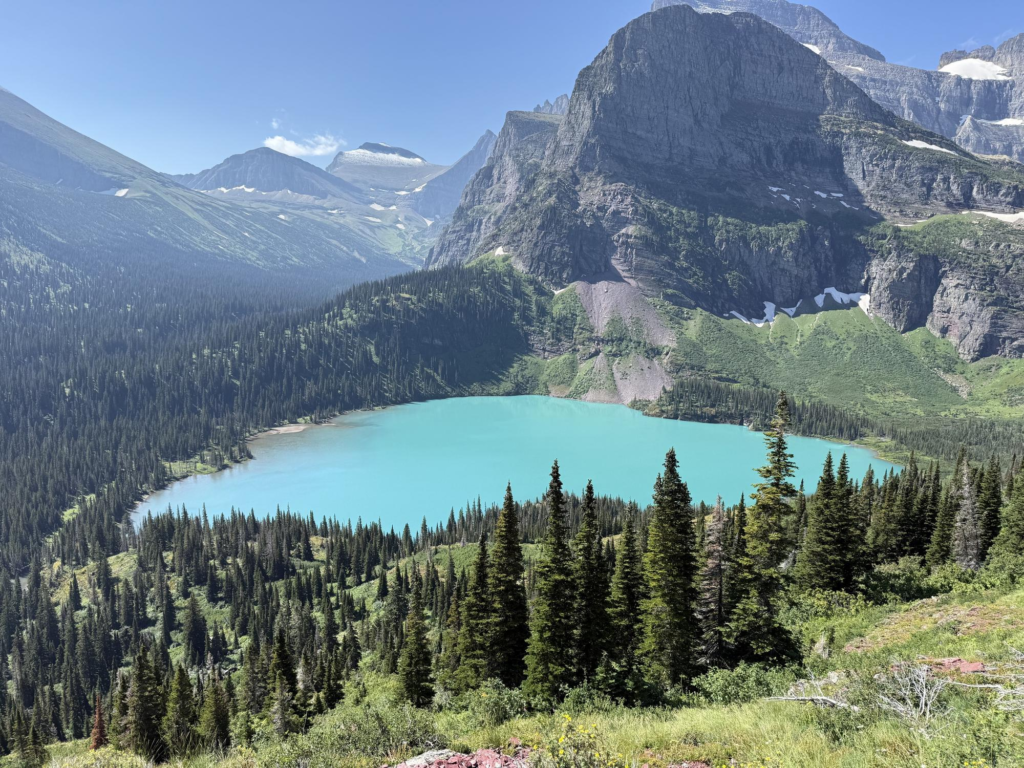
Grinnell Glacier Trail — Grinnell Glacier Trail (Glacial views & turquoise lakes)
Why hike it
Want a front-row view of a glacier and brilliant blue proglacial lakes? Grinnell delivers dramatic scenery and a high “wow” factor—classic Glacier.
Quick facts
- Distance: ~10–11 miles round-trip (Many Glacier area)
- Elevation gain: significant (step up to the glacier overlook)
- Time: 5–7 hours
Actionable strategy
- Start at Many Glacier early to secure parking.
- Break the hike at Grinnell Lake or a lookout—plenty of photo ops.
- Carry extra water; the summer sun and elevation will tire you faster than a flat hike.
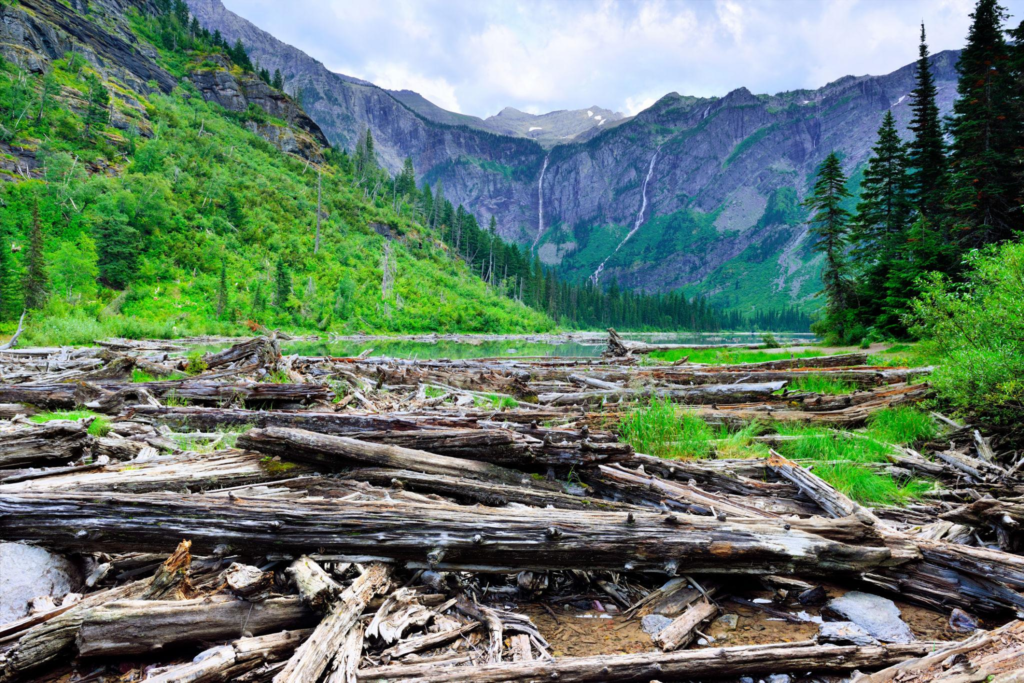
Avalanche Lake via Trail of the Cedars — Avalanche Lake via Trail of the Cedars (Family-friendly classic)
Why hike it
This trail pairs an easy boardwalk through old-growth cedars with a short, stunning payoff: the waterfall-fed Avalanche Lake cradled by steep cliffs.
Quick facts
- Distance: ~4.5 miles round-trip
- Difficulty: Easy–Moderate (family friendly)
- Time: 1.5–3 hours
What to expect & tips
- The Trail of the Cedars section is flat and shaded—great for kids.
- Avalanche Lake has limited shoreline; be respectful and avoid fragile vegetation.
- Arrive early; parking fills quickly on sunny days.
Iceberg Lake Trail — Iceberg Lake Trail (Wildlife & floating ice)
Why hike it
Iceberg Lake often holds ice well into summer—hence the name—and the bowl is a wildlife magnet. Expect dramatic walls and emerald water.
Quick facts
- Distance: ~9.5–10 miles round-trip (Many Glacier)
- Difficulty: Moderate
- Time: 4–6 hours
Field tips
- Watch for bighorn sheep and bears—stay alert and give animals space.
- The final approach is a gentle climb into a high-walled cirque—save your camera for the last mile.
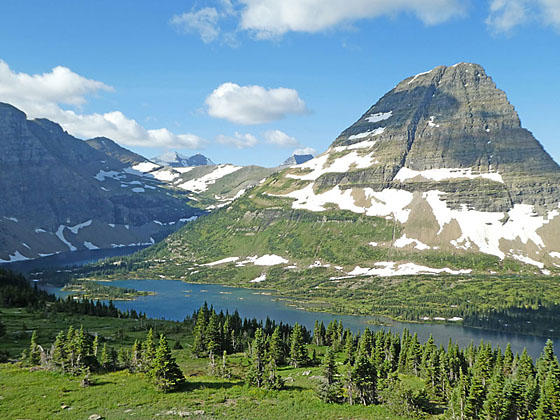
Hidden Lake Overlook — Hidden Lake Overlook (Short, high-reward)
Why hike it
Short, family-friendly, and spectacular: Hidden Lake Overlook is one of the park’s easiest routes to an alpine viewpoint with a strong chance of spotting mountain goats.
Quick facts
- Distance: ~2.8 miles round-trip (from Logan Pass)
- Difficulty: Easy–Moderate
- Time: 1–2 hours
Quick tips
- Logan Pass parking fills fast—arrive for sunrise or take the park shuttle.
- Snow can linger into early summer—microspikes may be needed some years.
- Keep children close near steep dropoffs.
By: Diane Greer
Ptarmigan Tunnel — Ptarmigan Tunnel (A carved shortcut through the rock)
Why hike it
Historic and a little cheeky: Ptarmigan Tunnel is a man-made cut through a narrow ridge that drops you into a remote valley—unique and photogenic.
Quick facts
- Distance: ~10.6 miles round-trip (varies by loop/approach)
- Difficulty: Moderate–Strenuous (steep approaches)
- Time: 5–8 hours
Insider notes
- The tunnel provides dramatic framing for photos—enter quickly to avoid congestion.
- Combine with the Ptarmigan Trail for a loop and varied scenery.
How to choose the right trail (fitness & time guide)
- 0–3 miles / 1–2 hrs: Hidden Lake Overlook, short boardwalks.
- 3–6 miles / half-day: Avalanche Lake via Trail of the Cedars.
- 6–10 miles / full day: Iceberg Lake, Grinnell Glacier.
- 7–12+ miles / strenuous day or multi-day: Highline Trail, Ptarmigan Tunnel.
Essential gear checklist (day hikes)
- 2–3 liters water (or hydration system)
- Layered clothing (wind and sun protection)
- Sturdy hiking boots with good traction
- Bear spray and means to carry it accessible (not in pack)
- First-aid kit, map/GPS, headlamp, extra snacks
- Trekking poles (helpful on descents and long routes)
Safety & wildlife etiquette
- Glacier is bear country: carry bear spray, hike in groups, make noise near brush.
- Never run from wildlife—give animals distance and retreat slowly.
- Trail conditions change: snowfields, rockfall, or washouts may appear—turn back when conditions are unsafe.
- Tell someone your route and expected return time if hiking solo.
Timing & logistics
- Best season: mid-June through September for most routes (snow and Going-to-the-Sun Road access vary).
- Parking & shuttles: Logan Pass and Many Glacier areas have limited lots—use shuttles, arrive early, or plan alternate days.
Also Read This
- “Glacier National Park Visitor Guide” — anchor: Glacier Visitor Planning & Going-to-the-Sun Road Status
- “What to Pack for Alpine Hikes” — anchor: Glacier Hiking Packing Checklist
- “Family-Friendly National Park Hikes” — anchor: Family Hikes in Glacier & Beyond
Also Read This
- National Park Service — Glacier National Park (official alerts, trail status, backcountry permits).
- AllTrails / local hiking guides (user maps, current route conditions).
- Montana Fish, Wildlife & Parks (regional wildlife advisories and safety).
Short featured-snippet summaries you can use
- “Best Hikes in Glacier National Park for a half-day: Avalanche Lake and Hidden Lake Overlook.”
- “Best full-day hike: Grinnell Glacier Trail or Iceberg Lake; Highline Trail is the top exposed ridge experience.”
Conclusion — Get out and hike the Best Hikes in Glacier National Park
From the airy switchbacks and Garden Wall panoramas of the Highline Trail to the glacier-rimmed lakes of Grinnell and Iceberg, these are the Best Hikes in Glacier National Park for scenery, wildlife, and a true mountain experience. Pick a trail that matches your fitness and time, prepare with the gear and safety tips above, and you’ll be rewarded with some of North America’s most memorable day hikes.
FAQs — Best Hikes in Glacier National Park
What are the best hikes in Glacier National Park?
Some of the most popular hikes include:
Grinnell Glacier Trail
Avalanche Lake Trail
Hidden Lake Overlook
Highline Trail
Trail of the Cedars
These hikes showcase Glacier’s iconic alpine lakes, glaciers, waterfalls, and mountain viewsHow many hiking trails are in Glacier National Park?
Glacier National Park has over 700 miles of hiking trails, offering options for both short scenic walks and multi-day backpacking adventures.
What is the most scenic hike in Glacier National Park?
The Highline Trail is often considered one of the most scenic hikes.
It follows the Garden Wall along the Continental Divide and offers sweeping views of glaciated valleys and mountain peaksWhat is the best easy hike in Glacier National Park?
Trail of the Cedars is one of the easiest hikes.
This short boardwalk trail features towering cedar trees and connects to Avalanche Lake for a longer scenic hike.What is the best hike for glacier views?
Grinnell Glacier Trail is one of the top hikes for seeing an actual glacier up close.
It leads hikers to views of one of the park’s most famous glaciers and glacial lakesAre there family-friendly hikes in Glacier National Park?
Yes — Glacier offers hikes for all skill levels, including:
Hidden Lake Overlook
Trail of the Cedars
Avalanche Lake
These trails provide scenic views without requiring technical climbing.What is the hardest hike in Glacier National Park?
Challenging hikes include:
Highline Trail
Grinnell Glacier Trail
Ptarmigan Tunnel
These longer hikes involve elevation gain and require preparation.When is the best time to hike in Glacier National Park?
The best time to hike is from late June through September, when most trails are snow-free and accessible.
Summer also provides the best chance to access high-elevation trails like Logan Pass.Is Glacier National Park good for beginners?
Yes — Glacier has trails for everyone, from easy lakeside walks to strenuous alpine climbs.
Can you see wildlife while hiking in Glacier?
Yes — hikers may encounter:
Mountain goats
Bighorn sheep
Moose
Bears
Wildlife sightings are common, especially on popular trails like Hidden Lake.Do you need reservations to hike in Glacier National Park?
Some areas require vehicle reservations to access trailheads along Going-to-the-Sun Road during peak season.
Why is Glacier National Park famous for hiking?
Glacier is known for its dramatic mountain scenery, glacial lakes, and diverse trail network spanning forests, alpine meadows, and rugged peaks.