
Introduction
Standing on the rim of the canyon for the first time is something most travelers never forget. Grand Canyon National Park is one of the world’s most breathtaking destinations. Its vast size, layered rock formations, and dramatic shadows stretch across miles of desert.
But almost every traveler asks one question before planning a trip. When is the best time to visit Grand Canyon National Park?
The truth is that the canyon changes dramatically throughout the year. Each season brings different temperatures, lighting conditions, crowd levels, and hiking opportunities. Spring brings wildflowers and mild hiking weather. Summer offers long days and access to the North Rim. Fall brings cooler air and fewer crowds. Winter turns the canyon into a quiet, snow-covered landscape.
This detailed Grand Canyon National Park travel guide explains the best time to visit depending on your goals. You’ll also learn about seasonal hiking options, top attractions, travel tips, sample itineraries, and nearby places to stay.
Where is Grand Canyon National Park

Grand Canyon National Park is located in northern Arizona, in the southwestern United States. The park stretches more than 270 miles along the Colorado River and reaches depths of over 6,000 feet.
Most visitors access the park from two main areas:
South Rim
The South Rim is the most popular section of the park and remains open all year. It includes major viewpoints, visitor centers, hotels, restaurants, and trailheads for famous hikes.
North Rim
The North Rim sits about 1,000 feet higher in elevation and receives fewer visitors. Because of heavy winter snowfall, it is typically open only from mid-May to mid-October.
Nearby Cities
Major travel hubs include:
- Flagstaff, Arizona (1.5 hours away)
- Phoenix, Arizona (3.5–4 hours)
- Las Vegas, Nevada (4–5 hours)
Most first-time visitors exploring Grand Canyon National Park hikes begin their journey at the South Rim due to its accessibility and infrastructure.
Best Time to Visit Grand Canyon National Park
The best time to visit Grand Canyon National Park depends on what you want to experience. Weather varies dramatically between the rim and the canyon floor, and each season has advantages and challenges.
Spring (March – May)
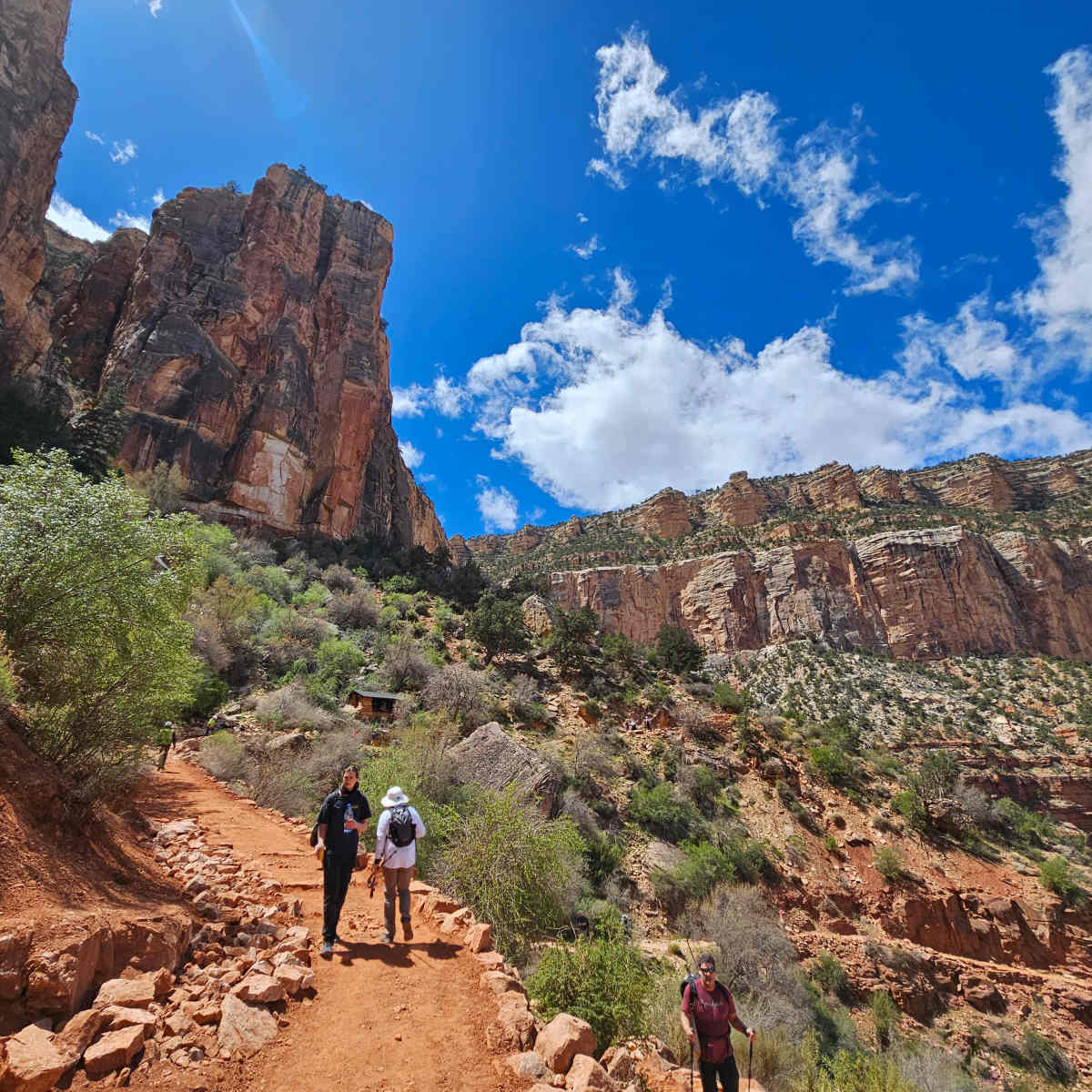
Spring is often considered the best overall time to visit Grand Canyon National Park.
Temperatures are comfortable for hiking, crowds are moderate, and the desert landscape begins to bloom with wildflowers.
Spring Weather
- Rim temperatures: 50–70°F (10–21°C)
- Canyon floor temperatures: 70–90°F (21–32°C)
Why Visit in Spring
- Ideal conditions for Grand Canyon National Park hikes
- Cooler temperatures for longer trails
- Wildflowers and desert plants in bloom
- Good visibility for photography
Spring Hiking Micro-Guide
Best trails in spring include:
Bright Angel Trail
Moderate to strenuous. The shaded canyon and seasonal water stations make this a great spring hike.
South Kaibab Trail to Cedar Ridge
One of the best half-day hikes with incredible panoramic views.
Rim Trail
Perfect for easy walking and photography.
Spring Sample Itinerary (2 Days)
Day 1
- Sunrise at Mather Point
- Walk a section of Rim Trail
- Sunset at Hopi Point
Day 2
- Early hike on South Kaibab Trail
- Lunch in Grand Canyon Village
- Visit Desert View Watchtower
Summer (June – August)
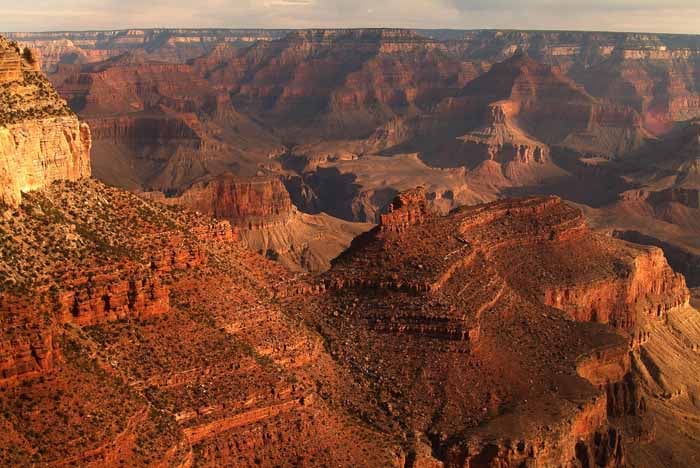

Summer is the busiest time to visit the canyon. Schools are on vacation, roads are fully open, and all visitor facilities are operating.
However, the inner canyon becomes extremely hot.
Summer Weather
- Rim temperatures: 70–90°F (21–32°C)
- Canyon floor temperatures: often over 105°F (40°C)
Why Visit in Summer
- North Rim is open
- All park services are operating
- Ideal for river rafting trips
Summer Hiking Micro-Guide
Because of extreme heat, shorter hikes are recommended.
Rim Trail
Easy, scenic, and safe during warmer months.
South Kaibab Trail to Ooh Aah Point
Short hike with spectacular sunrise views.
North Kaibab Trail (North Rim)
Cooler temperatures due to higher elevation.
Summer Sample Itinerary (2 Days)
Day 1
- Sunrise hike to Ooh Aah Point
- Breakfast in Grand Canyon Village
- Explore Yavapai Geology Museum
- Sunset at Desert View Watchtower
Day 2
- Walk Rim Trail viewpoints
- Helicopter or scenic flight tour
- Evening stargazing
Fall (September – November)


Fall is another excellent season to visit the canyon. Temperatures become cooler and crowds begin to thin.
Fall Weather
- Rim temperatures: 45–70°F (7–21°C)
- Canyon floor temperatures: 70–90°F (21–32°C)
Why Visit in Fall
- Comfortable hiking conditions
- Fewer tourists
- Beautiful autumn colors near the North Rim
Fall Hiking Micro-Guide
Bright Angel Trail to Havasupai Gardens
Great full-day hike during cooler weather.
Grandview Trail
A steep but rewarding trail with stunning views.
North Kaibab Trail
A quieter hike before the North Rim closes for winter.
Fall Sample Itinerary (3 Days)
Day 1
- Sunrise at Yavapai Point
- Walk Rim Trail
- Sunset at Hopi Point
Day 2
- Hike Bright Angel Trail
- Visit Grand Canyon Village historic district
Day 3
- Scenic drive along Desert View Drive
- Short hike along the canyon rim
Winter (December – February)


Winter offers a completely different Grand Canyon experience. Snow occasionally covers the rim, creating dramatic scenery.
Winter Weather
- Rim temperatures: 20–50°F (-6–10°C)
- Canyon floor temperatures: 40–70°F (4–21°C)
Why Visit in Winter
- Fewer crowds
- Snow-covered canyon landscapes
- Excellent photography conditions
Winter Hiking Micro-Guide
Rim Trail
Safe and scenic during winter months.
Bright Angel Trail (short sections)
Lower elevations remain snow-free most of the year.
Winter Sample Itinerary (2 Days)
Day 1
- Sunrise photography at Mather Point
- Visit Yavapai Museum
- Sunset at Hermits Rest
Day 2
- Walk Rim Trail viewpoints
- Scenic drive through the park
Top Attractions in Grand Canyon National Park
Mather Point
One of the most famous viewpoints in the park and often the first stop for visitors.
Yavapai Observation Station
Provides panoramic canyon views along with exhibits explaining the geology of the region.
Desert View Watchtower
A historic stone tower offering elevated views of the canyon and Colorado River.
Grand Canyon Village
The main hub for lodging, restaurants, and park transportation.
Best Hikes in Grand Canyon National Park

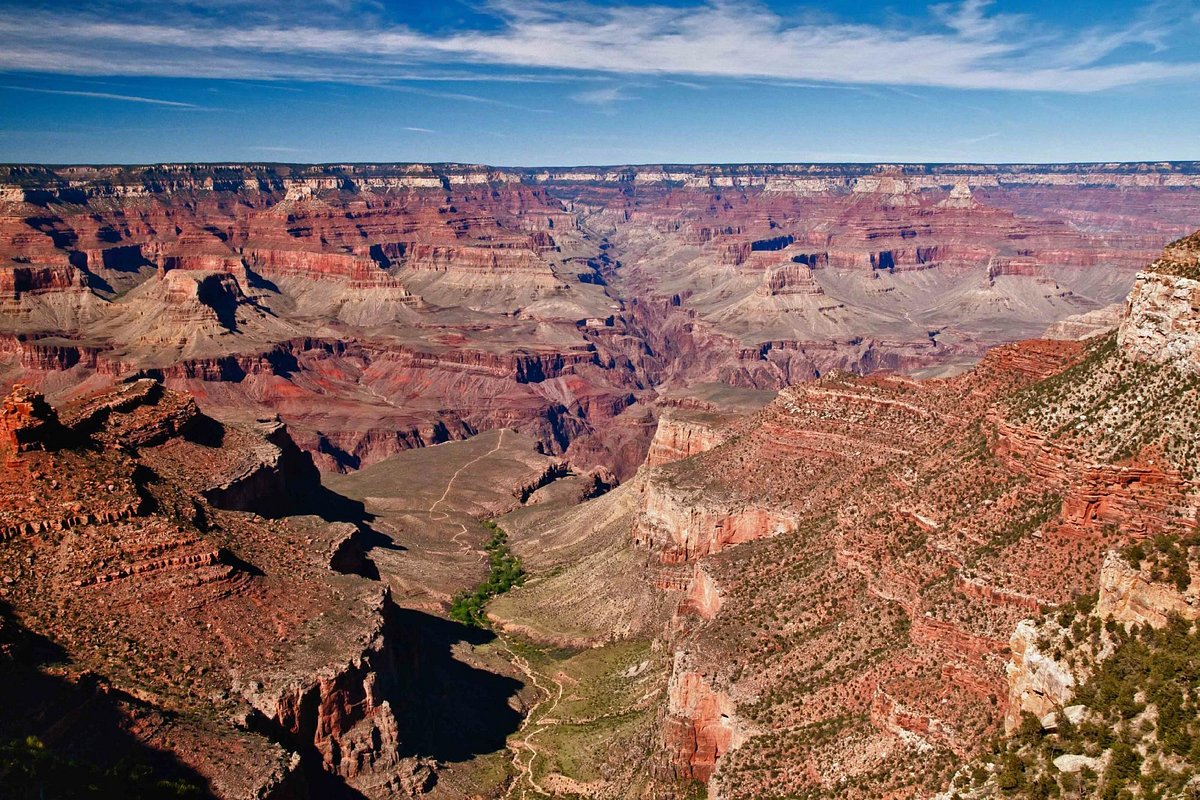
Some of the most famous Grand Canyon National Park hikes include:
Bright Angel Trail
Distance: up to 9.5 miles
Difficulty: Strenuous
This historic trail offers water stations, rest houses, and shaded sections. It is one of the safest routes into the canyon.
South Kaibab Trail
Distance: up to 7 miles
Difficulty: Strenuous
Known for panoramic ridge views and famous stops like Ooh Aah Point and Cedar Ridge.
Rim Trail
Distance: up to 13 miles
Difficulty: Easy
A paved scenic path connecting many viewpoints along the South Rim.
North Kaibab Trail
Distance: 14 miles
Difficulty: Very strenuous
A remote trail descending from the North Rim and part of the famous Rim-to-Rim hike.
Grand Canyon National Park Map and Travel Tips
Use the Shuttle System
Free shuttle buses operate along the South Rim, connecting viewpoints and trailheads.
Start Hiking Early
Temperatures rise quickly inside the canyon, especially during summer.
Carry Plenty of Water
The desert environment can quickly lead to dehydration.
Know Your Limits
The biggest mistake visitors make is hiking too far down and struggling to climb back out.
Where to Stay Near Grand Canyon National Park
Inside the Park
Staying inside the park provides easy access to sunrise viewpoints and hiking trails.
Popular options include:
- El Tovar Hotel
- Bright Angel Lodge
- Maswik Lodge
- Mather Campground
Tusayan
Located just outside the South Rim entrance, Tusayan offers several hotels and restaurants.
Flagstaff
Flagstaff is about 90 minutes away and provides a larger selection of accommodations.
Conclusion
The best time to visit Grand Canyon National Park depends on your travel style and hiking goals. Spring and fall provide the most comfortable conditions for exploring the canyon, while summer offers full access to facilities and the North Rim. Winter delivers peaceful scenery and fewer crowds.
No matter when you visit, the canyon’s dramatic landscapes, unforgettable hiking trails, and spectacular viewpoints make it one of the greatest natural wonders on Earth.
With proper planning, plenty of water, and an early start on the trails, your visit to the Grand Canyon will be an adventure you’ll remember for a lifetime.
FAQ
What is the best month to visit Grand Canyon National Park?
April, May, September, and October are considered the best months due to comfortable weather and fewer crowds.
How many days should I spend at the Grand Canyon?
Most visitors spend 2–3 days exploring viewpoints and hiking trails.
Can beginners hike in the Grand Canyon?
Yes. The Rim Trail and short sections of Bright Angel Trail are suitable for beginners.
Is hiking to the bottom of the canyon difficult?
Yes. It requires steep hiking and extreme elevation changes.
Do you need permits to hike in the Grand Canyon?
Day hikes do not require permits, but overnight backpacking trips require a backcountry permit.
Also Check these
- Best National Parks in the USA
Target:/best-national-parks-usa
Reason: Pillar page linking multiple park guides. - Best Hikes in Grand Canyon National Park
Target:/best-hikes-grand-canyon-national-park
Reason: Supporting content within the same cluster. - Zion National Park Travel Guide
Target:/zion-national-park-travel-guide
Reason: Related destination for hiking travelers. - Yosemite National Park Guide
Target:/yosemite-national-park-travel-guide
Reason: Cross-linking to another major park. - National Park Packing List
Target:/national-park-hiking-packing-list
Reason: Helpful planning resource.